
Short answer: chemically, no. Honest answer: it depends who you ask, and you should know why.
Most plastics are built on chains of carbon atoms, made from oil or gas. Silicone is built on a chain of alternating silicon and oxygen atoms, called a siloxane backbone, with small carbon groups hanging off the sides. That different backbone is why silicone shrugs off heat that would warp most plastics.
But silicone is still a synthetic polymer made in a factory, and some plastic-free advocates count it as plastic. Life Without Plastic, for example, treats it as one. Both views are reasonable. Chemistry says "different material." Your kitchen says "still not glass or steel."
We land in the middle: silicone isn't plastic, and it isn't perfect. Use it where it earns its place, and nowhere else.
Why silicone shows up in "plastic-free" products at all
Because something has to seal. Glass and steel are great until two pieces of them need to meet without leaking. Gaskets, O-rings and lid seals need to flex, and steel doesn't flex.
So the honest goal isn't zero silicone. It's as little silicone as possible, only where a seal is needed, and good-quality silicone when you use it.
Is silicone safe with hot food and drinks?
In the US, the FDA lists silicone elastomers among the rubber materials allowed for repeated contact with food, under 21 CFR 177.2600. That regulation also sets limits on how much material can be extracted from the finished part.
Quality still matters. Silicone can contain small, loose siloxane molecules left over from manufacturing. Good manufacturers remove most of them with a "post-cure," baking the finished part at around 200°C for hours. Germany's food safety agency, the BfR, recommends that food-contact silicone release no more than 0.5% volatile organic compounds in that test.
That difference shows up in testing. A 2022 study in Food and Chemical Toxicology checked four silicone cupcake molds. The two higher-quality molds met the 0.5% guideline. The two lower-quality ones didn't, and released more material in migration tests.
The takeaway: well-made, properly cured silicone is a sound choice for seals. Cheap, mystery silicone is where the questions are.
What "food-grade" and "medical-grade" actually mean
- Food-grade usually means the material is made to meet FDA 21 CFR 177.2600 for repeated food contact.
- Medical-grade usually means the material passed biocompatibility testing for medical devices, such as USP Class VI. It's a tougher bar for purity, but it's a medical standard, not a food one.
Neither label is a magic word on its own. The useful question to ask any brand is simple: which standard, and can you show the paperwork?
How to pick better silicone
- Ask what standard it meets. FDA 21 CFR 177.2600 for food contact, plus a post-cure, is a good baseline.
- Skip strong smells. A new silicone part that smells chemical may not be fully cured.
- Wash before first use. Then, for a coffee maker, run a cycle or two with just water.
- Keep it small. A seal is fine. A whole silicone brew basket means a lot more hot surface area.
What Foxy uses, and where
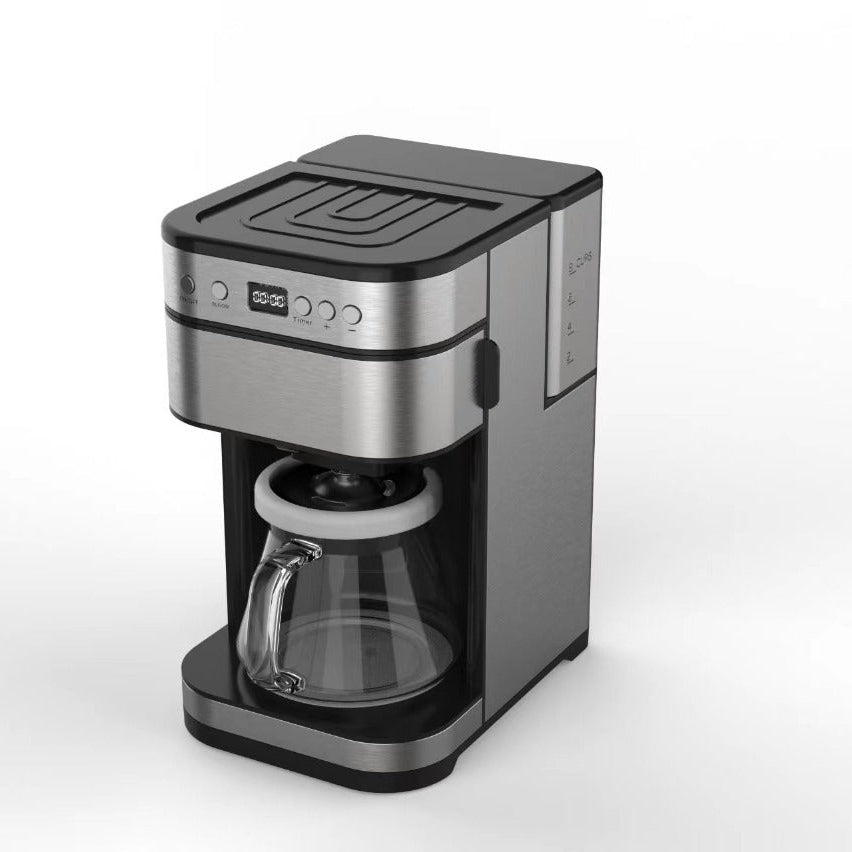
Foxy's brew path is stainless steel and glass. Silicone appears only in short connectors where the tubing joins, because those joints need to flex and seal. No silicone basket, and no silicone anywhere a seal isn't needed.
Want the full picture of what plastic-free should mean? Read our honest guide to plastic-free coffee makers, or see every part of Foxy that touches your water.
FAQ
Is silicone plastic?
Not chemically. Its backbone is silicon and oxygen, not carbon. Some plastic-free advocates still group it with plastics because it's synthetic.
Is silicone safe for hot coffee?
Well-made, properly cured silicone that meets FDA food-contact rules is widely used with hot food. Lower-quality silicone can release more leftover compounds.
Does silicone break down into microplastics?
Silicone is far more heat-stable than common plastics. Like any material, it wears over years of use, so replace cracked or sticky seals.
Is medical-grade silicone better than food-grade?
It's tested to a stricter purity standard, but that standard is for medical devices. For food contact, look for FDA 21 CFR 177.2600 too.
Last updated October 2026.
Share:
Plastic-free coffee makers: the honest guide
Stainless steel vs. glass vs. plastic: what your coffee maker is made of